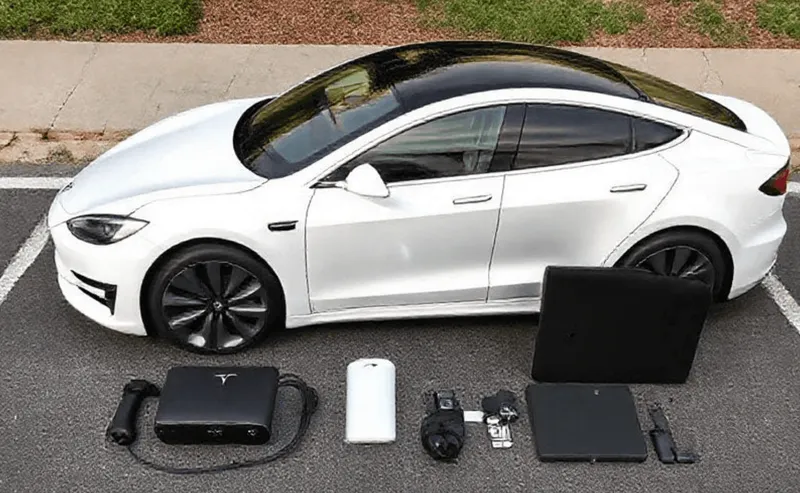
Tesla Aftermarket Installation: The Real Profit Engine for Global Distributors
Most distributors entering the Tesla aftermarket still assume that the money is in
Tesla aftermarket parts
. But anyone who has spent time dealing with real Tesla owners, after-sales issues, and returns eventually discovers a very different reality:
Selling parts is transactional. Owning installation is recurring.
Across the US, Europe, the Middle East, and Southeast Asia, the distributors who build sustainable Tesla aftermarket businesses share one common trait: they do not just manage inventory or chase purchasing prices; they treat
Tesla aftermarket installation
as their core competitive advantage. Tesla owners do not buy upgrades for the metal or plastic itself. They buy for one reason only: how the car feels after installation. Once you understand that, your entire business model shifts.
1. Tesla Owners Can Buy Parts Anywhere, but Installation Locks Them to You
Tesla owners are a very specific type of customer. Many are tech-savvy and comfortable with software and electronics, but far fewer are confident working with suspension components, brakes, or structural parts. They are willing to spend money, but not willing to take risks with mechanical work.
In practice, that leads to a simple but powerful reality:
They can buy parts from anyone, but once they pick someone to install them, that relationship is hard to replace.
A few patterns appear again and again in Tesla-focused markets:
A large portion of Model 3/Y owners struggle to install even a basic spoiler correctly.
Most owners will not touch anything involving suspension, braking, or chassis components.
Many returns are not caused by product defects, but by poor fitment, noise, or a vague feeling that “something is wrong” after installation.
For distributors, this has a clear implication:
whoever controls Tesla installation services controls the entire customer lifecycle.
Owners come back for checks and adjustments. If the first upgrade feels great, they will ask what else they can do next. They recommend their installer – not the cheapest online seller – to friends and colleagues.
In other words, installation is not a side service. It is a system that binds customers, amplifies reputation, and reduces price sensitivity in the Tesla aftermarket parts business.
2. Two Categories of Tesla Parts That Define Your Business Model
Smart distributors do not just categorize their catalog by vehicle model; they categorize it by
installation attributes
. One rule is especially important:
DIY-friendly parts bring volume and traffic; professional-installation parts bring profit and long-term relationships.
2.1 DIY-friendly parts: high volume, fast turnover
Typical DIY-oriented
Tesla aftermarket parts
include:
Small exterior components: spoilers, blackout trims, door handle covers
Interior accessories: overlay trims, floor mats, storage organizers
Simple electronics: wireless chargers, screen protectors, USB hubs
These categories are:
Easy to buy online, with minimal tools required
Low risk with simple pre-sales conversations
Ideal as entry products for customer acquisition and performance marketing
They are perfect for traffic and reach, but they rarely sustain high margins on their own. To turn Tesla upgrades into a serious business, you must combine these with professional-only parts and structured
Tesla installation services
.
2.2 Professional-only parts: lower volume, but the real profit engine
Professional installation parts consist of components that owners actively avoid installing themselves, and they deserve your most serious attention:
Suspension systems: coilovers, sport springs, high-end dampers
Braking systems: big brake kits, larger rotors, performance pads, stainless-steel lines
Chassis components: sway bars, control arms, toe arms, bushings, braces
Electronics and sensors: camera modules, radar components, specific control units
These parts are complex to fit, directly affect safety and handling, and nearly all owners rely on professional workshops or Tesla installation specialists to handle them. Per-vehicle margins are often three to eight times higher than simple cosmetic upgrades.
A mature
Tesla aftermarket installation
strategy always balances both sides:
Use DIY-friendly parts for reach and brand visibility.
Use professional installation parts to generate profit and deep customer stickiness.
3. Why “Parts + Mobile Installation” Is Becoming the Most Powerful Model
In markets that are further along the Tesla adoption curve, a clear trend appears: the most profitable players are not pure parts sellers. They are the ones who organize local
Tesla installation services
and mobile installers around their product catalog.
3.1 United States: no official upgrade channel, strong room for mobile installers
Tesla service centers do not handle aftermarket upgrades; they focus on factory service. That leaves a gap that independent performance shops and mobile installers quickly fill. A typical model looks like this:
The distributor or shop sells Tesla aftermarket parts online or through local partners.
A mobile technician arrives at the owner’s home or workplace.
The installation is completed onsite, with payment handled immediately.
For distributors, this model means:
No need for extensive brick-and-mortar infrastructure in every city.
The ability to serve wider areas through mobile partners.
Every parts sale becomes a double revenue opportunity: product + installation.
3.2 UK, Singapore, Norway: different contexts, same logic
In the UK, high labour costs and time pressure make on-site service a premium that Tesla owners are willing to pay for. In Singapore, the small geography and dense population make a two-hour on-site installation a natural service standard. In Norway, where cities are far apart and travel is time-consuming, on-site installation is often cheaper and more practical than asking owners to drive long distances to a workshop.
The underlying logic is simple: wherever owner time is expensive or travel is inconvenient,
Tesla’s aftermarket installation
delivered as a mobile service has strong potential to become the dominant model. Whoever organizes that network ends up controlling the local story around Tesla upgrades.
4. New vs Long-Time Owners: Monetizing the Full Six-Year Tesla Lifecycle
Pure parts sellers typically capture only a small slice of the Tesla ownership lifecycle – the “new car excitement” window. A strategic distributor, by contrast, uses
Tesla’s aftermarket installation
to monetize both:
The impulsive upgrade phase in the first one to two years
The performance restoration and structural improvement phase from year three onwards
4.1 New owners: buying excitement and pride
New owners are emotionally driven. They want the car to look and feel different from stock. Their typical projects include:
Exterior styling: spoilers, front lips, blackout trims
Wheels and tires: lightweight wheels with sport-oriented tires
Entry-level suspension: lowering springs or basic damper upgrades
Entry-level brake pads: slightly more bite, less dust
Installation in this phase is about
enhancing the emotional experience
. When the first set of Tesla aftermarket parts feels good, the owner’s likelihood of returning for phase two and three increases dramatically.
4.2 Long-time owners: buying restoration, stability, and safety
Once a Tesla enters its third to sixth year, a different kind of demand begins to scale:
Suspension refresh or upgrade: coilovers, comfort, or sport-tuned dampers
Structural updates: control arms, toe arms, bushings, anti-roll bars
Brake system refresh: rotors, pads, brake fluid
Chassis reinforcement: braces that tighten overall body control
For these owners,
Tesla installation services
are not optional; they are the core of the project. They want the car to leave the workshop once, come back tighter, safer, and more confidence-inspiring than before.
From a distributor’s point of view, Tesla aftermarket installation is a business that spans the full vehicle lifecycle. Done correctly, it lets you profit from both the early excitement and the later “restore and upgrade” phases of ownership.
5. Installation Errors: The #1 Source of Returns
A hard look at after-sales data usually reveals a harsh but useful truth:
Most quality complaints in the Tesla aftermarket are actually installation problems.
Typical scenarios include:
Spoilers installed crooked or lifting at the edges due to poor surface prep and temperature control
Coilovers are making noise because the preload or torque specs were ignored
Brake vibration caused by incorrect bedding or insufficient cleaning of rotors
Control arms tightened with the suspension unloaded, leading to noise and premature wear
Wiring routed incorrectly, chafing against moving parts, and failing early
Camera or sensor errors triggered by poor grounding or electromagnetic interference
For Tesla owners, the default reaction is almost always: “The part is bad.”
For distributors, the most effective response is not to cut prices but to build standardized
Tesla installation services
that prevent 80% of avoidable issues before they appear.
6. Category-by-Category Installation Priorities Your Teams Must Master
As a distributor, you do not need to personally teach every technical detail, but you must define what your installers cannot afford to ignore. Instead of letting them rely only on “experience,” give them a clear checklist for each category of Tesla aftermarket parts.
6.1 Exterior parts (spoilers, lips, trims)
Thorough cleaning and degreasing of surfaces before applying tape or adhesive
Temperature control – cold conditions drastically reduce adhesive performance
Accurate positioning methods aligned to body lines, gaps, and edges
Consistent pressure and sufficient curing time before the customer drives away
6.2 Suspension parts (springs, coilovers, arms)
Correct preload and ride height adjustment
Respecting torque specifications on all fasteners
Mandatory wheel alignment after installation
Clear communication with the owner about how the car may feel different during the first few hundred kilometers
6.3 Braking systems (pads, rotors, BBKs)
Proper bedding-in procedures for pads and rotors
Noise control via chamfering, shims, and backing plate solutions, where applicable
Checking for contamination, such as grease or fluid, on friction surfaces
Verifying pedal feel and travel after installation and before delivery
6.4 Chassis reinforcement (sway bars, braces)
Correct orientation and mounting positions – sway bars are often installed backwards or in the wrong adjustment holes
Double-checking all mounting points after final torque
Low-speed test drives to listen for unusual noises or binding
6.5 Electronics (cameras, sensors, modules)
Routing wires away from heat sources and moving components
Using secure tie-downs to eliminate slack and vibration
Ensuring basic weather protection where needed
Running functional tests and a short road test to confirm system stability
This is not a full technical manual, but it is a blueprint for building repeatable, professional
Tesla aftermarket installation
processes inside your network.
7. Different Markets Need Different Installation Strategies
Parts can be sold globally, but installation is inherently local. Different regions have different expectations and constraints when it comes to Tesla installation services and upgrade packages.
Europe:
strict regulations and certification requirements mean many upgrades must be carried out in certified workshops with proper documentation. Professional installation is often part of regulatory compliance.
United States:
strong DIY culture, but customers are also highly convenience-driven. This combination makes mobile Tesla aftermarket installation a natural growth model.
Middle East:
high temperatures, high-speed driving, and long distances make professionally installed suspension and brake upgrades essential for safety and durability.
Southeast Asia:
challenging road conditions put greater stress on chassis components; poor-quality or incorrect installation shows up quickly in the form of noise, looseness, and premature wear.
For global distributors, the key question is not only “Where am I selling?” but also “What does this country’s installation reality and owner behavior imply about the service + parts combinations I should offer?”
8. Choosing a Supplier Also Means Choosing an Installation Partner
In many Tesla-focused programs, a significant portion of after-sales issues are caused by installation, not parts quality. This means your supplier evaluation should include a hidden KPI:
Can this supplier support your installation capability?
A professional Tesla aftermarket parts supplier should be able to provide:
Installation videos for key products
Exploded diagrams and basic technical drawings
Torque specification sheets
Model-year fitment notes
Common error prevention tips and troubleshooting guidance
These elements reduce returns and protect your reputation far more effectively than another 5% discount ever will.
This is where
DHD EV Parts
fits naturally into the picture. The company provides:
Over 2,000 Tesla-related aftermarket SKUs
Support for distributors building structured Tesla installation services
Logistics flexibility via warehouses in China and Portugal
Basic installation guidance, torque references, and key fitment notes for major product lines
In practice, that means DHD EV Parts is not just shipping boxes; it is helping you turn installation capability into a competitive advantage in the Tesla aftermarket installation segment.
9. Bonus Resource: Tesla Official Service Manual & How to Get More Installation Support
Many distributors and workshops are not fully aware that Tesla has its own rigorous standards and procedures for installation. If you want to build a truly professional
Tesla aftermarket installation
business, those standards should at least serve as your reference baseline.
As a professional courtesy, here is a publicly accessible link to Tesla’s official documentation:
Tesla Service Manual – Model S Installation Reference
https://service.tesla.com/docs/ModelS/ServiceManual/en-us/GUID-37F7CFEA-6426-4BBD-9EAB-03DC2AE673C1.html#TASK_RYZ_3PJ_SN
If you want to:
Build structured training materials for your installation teams
Develop standardized SOPs and torque charts for your most popular Tesla upgrades
Evaluate installation risks for specific projects, such as suspension, braking, or chassis reinforcement
You can reach out directly to
DHD EV Parts
. Based on your country, market position, and target customers, we can help you clarify:
Which Tesla aftermarket installation projects should you prioritize
Which parts are ideal for DIY and which should be packaged as “parts + installation”
How to turn installation capability into a scalable, defensible profit engine in the Tesla aftermarket
Tesla Aftermarket Installation Parts
Email us if you want to know
Tesla Aftermarket Installation Parts